
Executive Summary
The 2027 Snohomish County Sheriff election presents a historic and deeply polarizing rematch between incumbent Sheriff Susanna Johnson and former Sheriff Adam Fortney. Following a 2023 election decided by less than 5,300 votes, this race encapsulates a fundamental community debate over the philosophy of public safety within a rapidly growing county of nearly one million residents.
Sheriff Johnson, representing a return to conventional professionalism, has spent her current term stabilizing the agency's risk profile and successfully restoring its state WASPC accreditation. However, her administration faces a crippling $14.9 million corrections budget deficit driven by acute staffing shortages and an unsustainable 2.25x union overtime multiplier.
Conversely, former Sheriff Fortney offers a populist, aggressive law enforcement model. While celebrated for proactive data transparency and innovative youth intervention programs, his previous tenure was marked by intense controversy—including the rehiring of terminated deputies, significant civil liabilities, and a high-profile refusal to enforce state public health mandates that triggered a State Supreme Court-validated recall effort.
This comprehensive analysis objectively breaks down the incumbent baseline, the historic electoral data, and the contrasting executive philosophies that will define the political landscape and the path forward for Snohomish County.
The 2019 Paradigm Shift
To accurately evaluate the implications of the 2027 candidacy, we must contextualize the unique political and sociological conditions that facilitated Adam Fortney's initial ascension to the office in 2019. Serving a rapidly growing population of nearly one million residents, the Snohomish County Sheriff's Office is a highly influential agency. Fortney, running as a veteran patrol sergeant and union president, launched a populist insurgency campaign against his own commanding officer with a pledge to "take the handcuffs off police officers."
His victory represented a massive mandate from voters for a more traditional, aggressive policing model. However, the transition from an adversarial union president to the top executive immediately tested his capacity to balance internal loyalty with departmental liability, resulting in a starkly polarized four-year term.
The 2023 Election Cycle: Polarization, Campaign Finance, and the Mandate for Change
The culmination of Fortney's turbulent first term was the 2023 electoral showdown against Susanna Johnson, a 30-year veteran of the agency who ran explicitly on a platform of restoring institutional trust, traditional accountability, and state accreditation.
The race rapidly nationalized and shattered all previous local records for county-level campaign finance, drawing massive influxes of out-of-county political action committee (PAC) money. It fundamentally became a proxy battle for broader national ideological conflicts regarding the role and absolute authority of law enforcement.
Ultimately, Johnson secured a remarkably narrow victory over the incumbent by less than 5,300 votes. This slim mandate for change signaled a deeply polarized electorate—one heavily divided between the desire for Fortney's aggressive, localized deterrence and Johnson's promise of systemic, policy-driven professionalism.
Executive Discretion and Personnel Controversies: The Reinstatement Cases
One of the most consequential points of divergence between the two candidates is their philosophy regarding executive discretion and institutional discipline. Following his 2019 victory, Fortney immediately exercised his executive authority to reinstate three deputies who had been explicitly discharged for cause by his predecessor following comprehensive internal investigations.
These reinstatements were highly controversial. One case involved a deputy terminated for an unjustified, fatal use of force that ultimately cost Snohomish County a $1 million civil settlement. Another involved a deputy discharged over unauthorized relationships and untruthfulness during an internal probe. By overturning these rigorous investigative findings, Fortney signaled absolute loyalty to the rank-and-file—a move that resonated powerfully with his internal base but severely undermined the agency's established disciplinary guardrails.
The Intersection of Liability, Accreditation, and Public Trust
The downstream effect of prioritizing internal loyalty over standardized accountability is a fundamental shift in a county’s liability profile. The immediate consequence of the reinstatement controversies was the Snohomish County Sheriff's Office being stripped of its state law enforcement accreditation by the Washington Association of Sheriffs and Police Chiefs (WASPC) in 2021. This unprecedented loss of accreditation signaled to insurers, county risk managers, and civil litigators that the agency's internal policies were no longer operating within best-practice standards.
In stark contrast, Johnson’s administration prioritized the immediate repair of this institutional damage. By enforcing a methodical, policy-driven approach to basic standard operating procedures and systematically stripping away the legacy of informal, old-guard practices, her leadership successfully guided the agency through the rigorous compliance auditing required to regain its WASPC accreditation.
However, this administrative victory represents a double-edged sword regarding workforce morale. While holding staff strictly accountable to modern, defensible risk-management protocols rebuilds public trust and shields taxpayers from massive civil settlements, it simultaneously alienates elements within the agency accustomed to a more permissive, traditional law enforcement culture—setting the stage for internal friction entering the 2027 cycle.
Public Health Mandates, Constitutional Sheriff Ideology, and the Recall Campaigns
Fortney’s tenure was deeply defined—and quickly nationalized—by his explicit public defiance of state executive authority during the COVID-19 pandemic. By actively stating his agency would refuse to enforce state-issued public health mandates, Fortney firmly aligned himself with the controversial "Constitutional Sheriff" ideology. This doctrine controversially asserts that a county sheriff holds ultimate executive authority within their jurisdiction, superseding state mandates if the sheriff personally deems them unconstitutional.
This unilateral refusal to enforce the governor's executive orders triggered intense community backlash and birthed multiple, well-funded citizen-led recall campaigns. The structural and legal dispute ultimately escalated to the Washington State Supreme Court.
The court issued a unanimous ruling validating the legal basis for the recall effort against Fortney. In their decision, the justices explicitly noted that it is the exclusive role of the judiciary—not local county sheriffs—to determine the constitutionality of state laws and mandates. While the recall organizers ultimately failed to gather enough physical signatures to trigger a special election within the tight 180-day statutory window, the event crystallized the deep polarization surrounding his administration and cemented his reputation among both his staunchest supporters and his fiercest critics.
The Incumbent Baseline: Sheriff Susanna Johnson’s Administration and Fiscal Challenges
As the 2027 cycle approaches, Sheriff Susanna Johnson’s ongoing record forms the incumbent baseline. Upon taking the oath of office in January 2024, her administration focused heavily on overarching institutional stabilization, dedicating massive administrative resources to successfully guide the agency through rigorous compliance reviews to regain its state WASPC accreditation.
However, this early administrative success is currently overshadowed by a staggering operational emergency: a $14.9 million budget deficit projected across the 2025-2026 biennium within the corrections department. This unprecedented physical and fiscal crisis is structurally driven by chronic, acute staffing shortages compounding with a lucrative union mandate that established an unsustainable 2.25x overtime multiplier required merely to maintain basic, legally-mandated facility security. Navigating this fiscal cliff without compromising county-wide patrol resources remains her administration's defining performance test.
Technological Modernization, Data Integrity, and Crime Reporting
A definitive operational success of Fortney’s administration was his focus on technological modernization and data integrity. Early in his tenure, an internal audit discovered approximately 70,000 specific incident responses missing from historical dispatch records due to antiquated and siloed legacy reporting systems. Fortney prioritized a massive data reconciliation effort, utilizing specialized crime analysts to recover and correctly integrate the missing records.
This effort culminated in the launch of a dynamic, interactive online crime dashboard. By democratizing access to near real-time data, his administration significantly improved the agency's baseline transparency. This modernization allowed both citizens and policymakers to independently verify neighborhood crime trends rather than relying solely on heavily curated departmental press releases.
The Evolution of Community Engagement: From Agency Program to the Lead The Way Foundation
Parallel to his aggressive enforcement philosophy, Fortney demonstrated a nuanced recognition of the structural limitations of the traditional juvenile justice system. During his tenure, he designed and launched "LEAD the Way"—an intensive, eight-week intervention curriculum specifically targeting at-risk and gang-affiliated youth before they become fully entrenched in the criminal justice pipeline.
Distinct from conventional punitive detention models, the program focuses heavily on essential life skills, character development, and intense, direct mentorship from law enforcement personnel. This initiative was widely celebrated across the political spectrum as a highly successful investment in proactive, grassroots crime prevention.
Following his 2023 electoral defeat, the program's undeniable effectiveness and popularity were substantial enough to survive his exit from the agency. Fortney successfully transitioned the initiative into the civilian sector, officially establishing the "LEAD the Way Foundation" as an independent 501(c)(3) nonprofit. This ongoing civilian operation keeps Fortney deeply embedded in grassroots community engagement and youth outreach across Snohomish County, providing a strong, highly visible counterweight to his controversial reputation regarding executive discipline.
Reported Reductions in Violent and Property Crime
After a historic surge in crime statewide in 2022, recent data from the current administration highlights promising local reductions across specific high-profile categories. The graphic below illustrates the contrasting trajectories, showcasing sharp, sustained declines in both violent and property offenses—such as homicides and auto thefts—moving into 2026.
Voters must ultimately weigh these recent statistical reductions in crime and the restoration of state accreditation against the previous Fortney administration's legacy of aggressive, high-visibility deterrence and proactive data transparency.
Contrasting Executive Philosophies
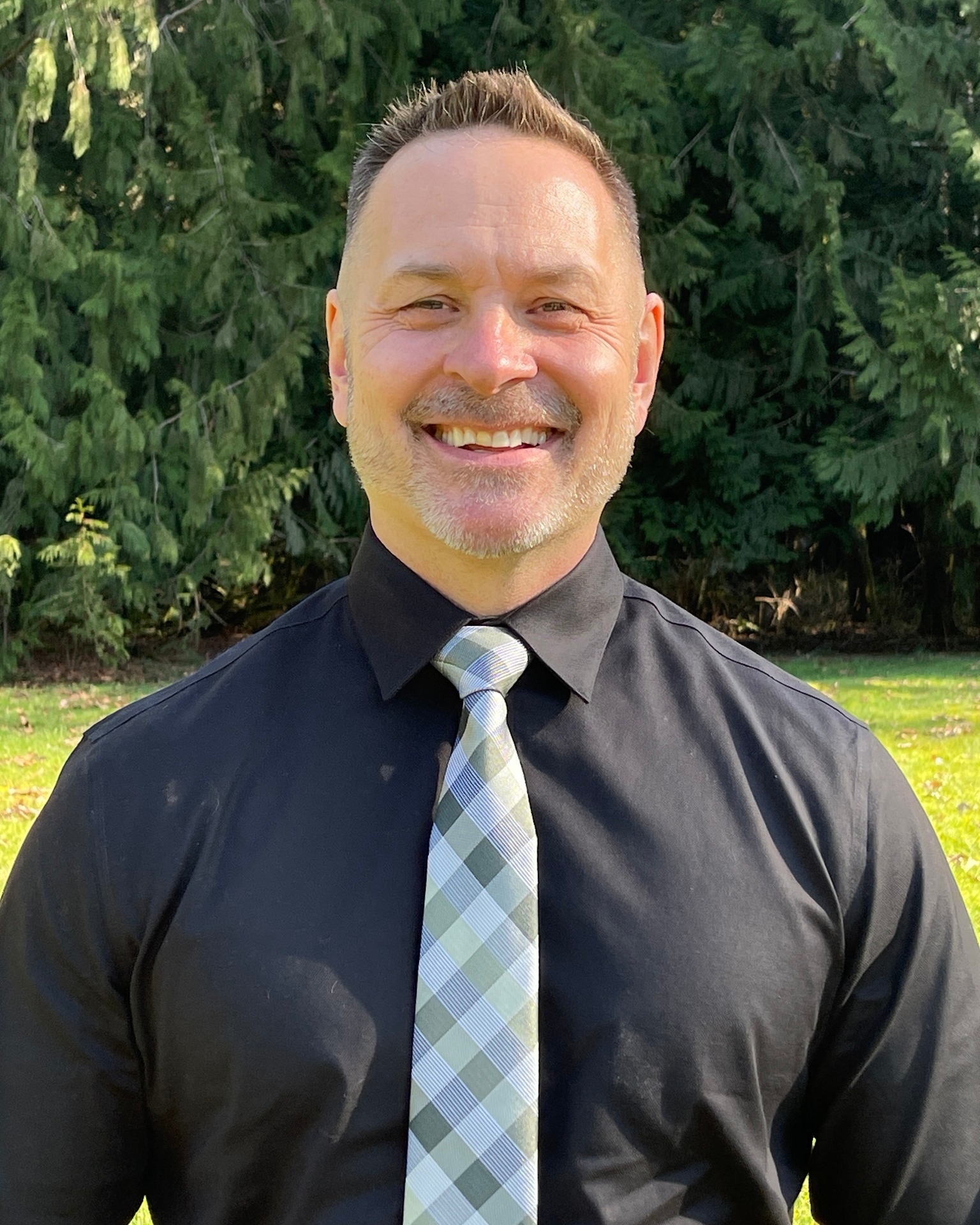
Adam Fortney
2027 ChallengerFocuses heavily on proactive, visible enforcement and grassroots youth mentorship via the "LEAD the Way" Foundation. Criticized for past personnel decisions overturning internal discipline and defying pandemic health mandates.
- ✓ Launched interactive crime data dashboard
- ✓ Deeply invested in youth intervention
- ✗ Employes cronyism and favortism
- ✗ Institutional liability, lost state WASPC accredication

Susanna Johnson
Current SheriffPrioritizes rigorous professional standards, institutional stability, and rebuilding risk-management profiles. Current term is heavily challenged by inherited staffing shortages and a devastating corrections budget deficit.
- ✓ Successfully regained state accreditation
- ✓ Recent metrics show specific drops in crime
- ✗ Inherited severe corrections staffing crisis
- ✗ Managing $14.9 million budget deficit
In the Best Interest of Snohomish County
Determining the best interest of the community requires carefully weighing the explicit administrative and ideological arguments for and against returning Adam Fortney to office versus retaining Sheriff Susanna Johnson.
Adam Fortney
The Argument For:
- ✓ Delivers aggressive, highly-visible deterrents to street-level crime.
- ✓ Proven track record of civilian-led proactive youth engagement via LEAD the Way.
- ✓ Unyielding willingness to fiercely challenge state mandates viewed as unconstitutional overreach.
The Argument Against:
- ✗ History of cronyism as evidenced by unilaterally overriding internal discipline protecting rank-and-file deputies.
- ✗ History of selective enforcement as "consitutional sheriff", resulting in erosion of trust and the rule of law.
- ✗ Crony and favortism based leadership style erodes good order, discipline, and accountability.
- ✗ Actionable correlation with severe civil liabilities (e.g., $1M unjustified use-of-force settlement).
- ✗ Structural and ideological leadership decisions risk the recurring loss of state WASPC accreditation.
Susanna Johnson
The Argument For:
- ✓ Enforces a methodical, policy-driven executive framework that securely limits county liability.
- ✓ Successfully regained state accreditation and systematically stabilized operational guardrails.
- ✓ Overseeing current statistical reductions in violent and property crimes (e.g., auto thefts) entering 2026.
- ✓ Well regarded in a growing and increasingly diverse community.
The Argument Against:
- ✗ Presiding over a staggering $14.9 million structural and operational corrections budget deficit.
- ✗ Severe inability to effectively mitigate staffing shortages and the 2.25x union overtime multiplier crisis.
- ✗ Rigid adherence to procedural protocols has actively alienated the traditional law enforcement base.
Analyzing the 2027 Campaign Strategy and Concluding the Community Interest Assessment
The 2027 sheriff’s race presents an exceptionally profound choice for the one million residents of Snohomish County, representing fundamentally opposed structural and ideological visions for the agency's future. The campaign strategies for both candidates are already sharply drawn based on the realities of their established public records.
Adam Fortney’s Campaign Strategy relies heavily on mobilizing his dedicated populist base through a platform of aggressive, highly-visible deterrence and proactive grassroots crime prevention. He will likely emphasize the success of his independent "LEAD the Way Foundation" and data transparency, while framing his controversial refusal to enforce state public health mandates as a defining defense of constitutional liberties. His strategic challenge will be convincing moderates that his loyalty-based executive style will not recreate the staggering civil liabilities or loss of state accreditation that plagued his first term.
Susanna Johnson’s Campaign Strategy is anchored firmly in the restoration of institutional trust, methodical policy adherence, and the recent statistical reductions in major property and violent crimes. She will campaign heavily on the successful return of the WASPC state accreditation and her dismantling of informal cronyism. However, her re-election bid remains deeply vulnerable to the compounding $14.9 million corrections deficit and the 2.25x overtime multiplier crisis. Her challenge lies in proving administrative competence can successfully navigate this massive fiscal cliff without degrading proactive patrol operations.
Concluding the Community Interest Assessment: Ultimately, the electorate must weigh whether the community interest is best served by a return to Fortney's traditional, proactive law enforcement model fueled by unyielding rank-and-file loyalty, or by Johnson's methodical, policy-driven professionalism tasked with steering the county through a devastating fiscal storm.